

Supporting Access to Therapy
Money & the Therapeutic Relationship: What does money have to do with trust?
When it comes to discounted rates, having a therapist decide what someone can and cannot afford creates a power dynamic that I don't think should be ignored
A fair exchange requires both people to feel comfortable with what they're giving and receiving. When either person feels they're giving more than they're comfortable with, discomfort and resentment can develop.
Because the therapy is between someone needing help and another providing it, the therapist inherently holds more power in this exchange. I believe that makes it the therapist’s responsibility to establish and uphold their own financial boundaries.
By only agreeing to rates that I am comfortable accepting, you can trust that you're not taking advantage of me when receiving discounted services.
So how do I make sure discounted rates are fair to both of us?
Two people can earn the same amount of money and have completely different financial circumstances.
Medical expenses, family responsibilities, debt, and other financial obligations can make therapy difficult to afford, even when someone's income looks comfortable on paper.
Ultimately, the person receiving therapy is the only one who fully understands their financial circumstances. I can't fairly determine what someone can or cannot afford based on their income.
So I choose to accept the risk.
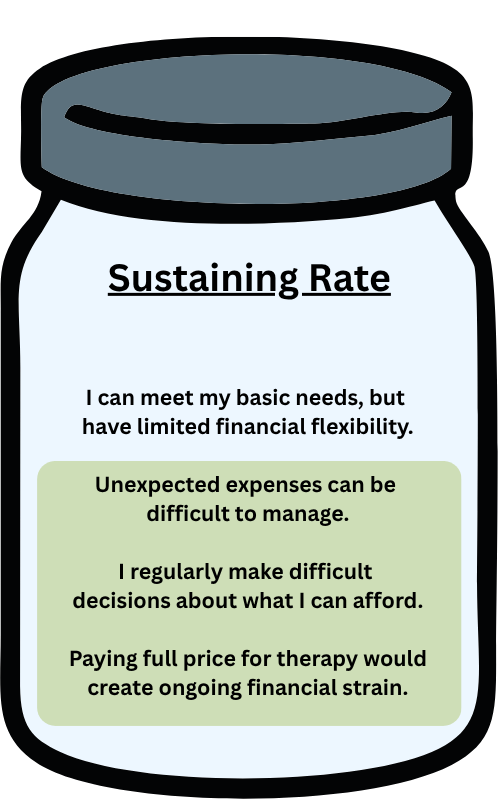
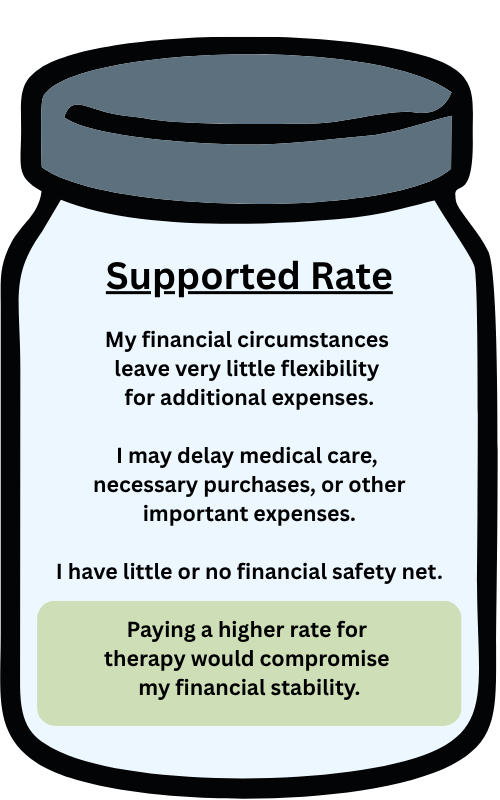
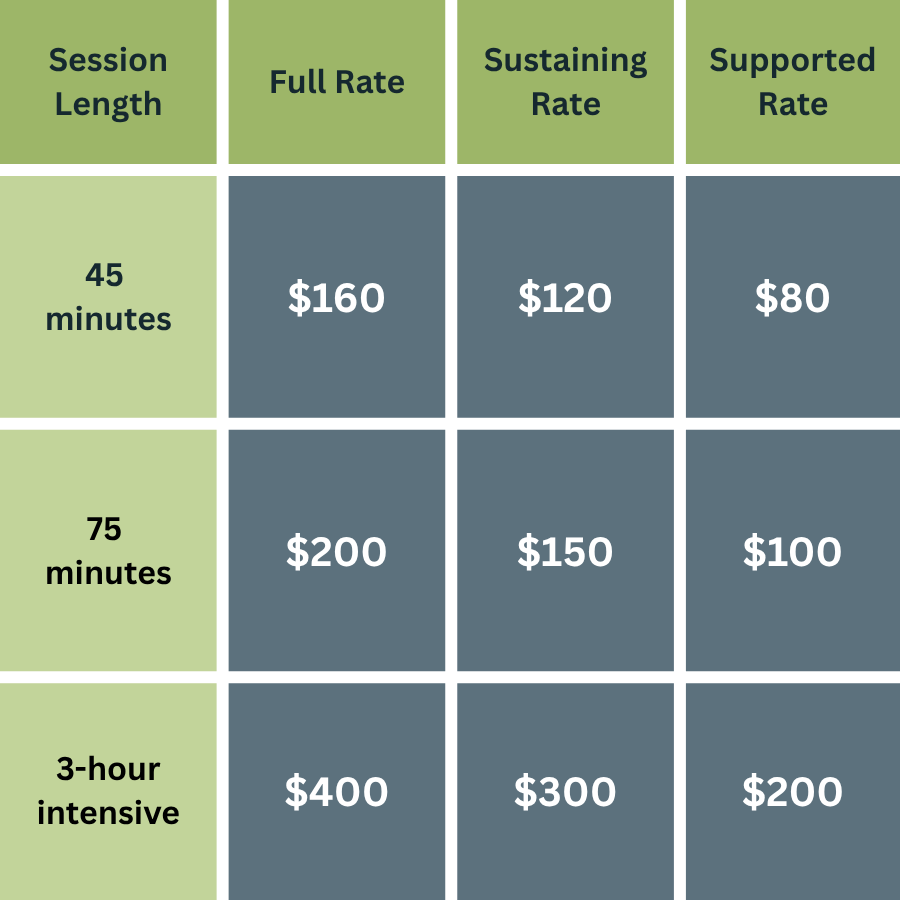
I offer a limited number of appointments at discounted rates, without income requirements or financial documentation. Instead, I use an honor-based system that trusts you to consider your own circumstances and choose a rate that makes therapy sustainable.

Rather than using income requirements to determine eligibility, I ask you to consider how paying for therapy would affect your financial well-being.
Paying for therapy may require making financial sacrifices, just like other things we choose to prioritize. But those sacrifices shouldn't come at the expense of your essential needs, financial stability, or long-term well-being.
The goal is to choose the highest rate you can sustainably afford. This would be the rate that that helps push you to use our time well and achieve goals you’ve set for yourself, while also not needing to prematurely end services or skip sessions due to financial hardship.


Discounted rates for group therapy will depend upon the group being offered.
Please ask if you have questions regarding this!
I realize that I do need a discounted rate? Now what?
If you've decided that a discounted rate would make therapy more financially sustainable for you, just let me know! You can mention it when reaching out to schedule your first appointment or bring it up at any point while we're working together.
To avoid influencing your financial decisions, I try my best to stay out of your therapy budgeting. So even if you mention money troubles, I won't automatically bring up discounted rates, because sometimes you just need a place to complain about money without it becoming a question about what you can and cannot afford.
I know it is uncomfortable, but you need to make the first move and ask directly. I will not assume hints about financial struggles mean that you are asking me for a discounted rate.

I do have a limited number of discounted appointments available, so I may not always be able to accommodate a request. That limitation is my responsibility to manage, not yours to anticipate. You're welcome to ask, and you can trust that I'll be honest about what I'm able to offer.
And if your financial circumstances change, we can always revisit your rate. I appreciate you keeping me informed when those changes affect what you can sustainably afford! Like I mentioned at the top of this page, I am trusting you to be fair, to both of us, and so it supports our therapeutic relationship when you ask for rate adjustments as needed.